 89 Days Strong
How to explain the NICU to a toddler
When a new baby goes to the NICU, the big kids at home have questions too, even if they can't put them into words yet. A toddler doesn't need the whole story. They need short, true words, a grown-up they trust, and a day that still feels like home. Here are words you can borrow, ways to help them feel close to the baby, what to know about sibling visits, and what can help with big feelings.
A note from our family: this is general information from one NICU family to another, not medical advice. Every baby and every unit is different, and sibling visit rules vary, so please ask your baby’s care team about anything specific to your baby or your unit.
A weekly note for NICU and preemie families.
One short email a week: a practical tip, a new guide when there is one, and a reminder that you're not doing this alone. Free, and easy to unsubscribe.
Free printable: The NICU Questions List (PDF)Get the printable, plus a weekly note for NICU families. The download is free, no email needed. Free printable: First Week Home From the NICU (PDF)One calm spot for the numbers you'll need, a folder list for your papers, who offered help, and a simple plan for taking turns resting.It pairs with our guide, Scared to bring baby home from the NICU?
Don't see the form? Tap below to sign up.
Subscribe to the Weekly NoteBefore you start
You don't need a perfect speech. A few things make it easier for little ones to take in:
- Keep it short. One or two sentences at a time is plenty for a toddler.
- Use real words. "Hospital," "NICU," "nurse," and "doctor" are easier to understand than "the baby is away."
- Tell the truth, simply. "I don't know yet" is a true answer, and a kind one.
- Pick a calm moment. Bath time, a snack, or a car ride works better than a rushed goodbye at the door.
- Expect the same question again. Toddlers learn by repeating. Answering the tenth time is part of how they understand.
Simple words you can use
Borrow these, change them to fit your family, and use your baby's name if you've chosen one.
Where the baby is
"The baby is staying at the hospital in a special room called the NICU. Nurses and doctors are there all day and all night to take care of babies."
Why the baby is there
"The baby needs extra help from the nurses and doctors right now." If your baby was born early, you might add: "She was born before she was ready, so she's getting extra help."
That it isn't their fault
Young children sometimes think something they did or wished made this happen. Say it out loud, even if they haven't asked: "Nothing you did or said made this happen. Nobody did anything wrong."
Where you are going
"I'm going to the hospital to be with the baby. Grandma is picking you up today, and I'll be home for bath time." Name who is taking care of them, and only promise what you can keep.
When the baby is coming home
"We don't know yet. The nurses and doctors are helping the baby, and I'll tell you when I know more."
What the equipment is for
If your toddler will see photos or visit, a few plain words help. Your baby's nurse can help you find the right words for your baby's equipment.
- "The clear bed is like a cozy crib that keeps the baby warm."
- "The stickers and wires help the nurses keep an eye on the baby."
- "The machines beep a lot. The beeps tell the nurses to come check."
- "The little tube helps the baby get milk." (Only if your baby has one.)
Some children worry they could "catch" what the baby has. If yours does, ask your baby's nurse how to explain your baby's situation in kid words. For the grown-up words you'll hear, our plain-language guide to NICU words can help.
Words to skip
- "Be good so the baby gets better." It ties your child's behavior to the baby's health, which no child should carry.
- "The baby will be home soon." Unless your team has told you, nobody knows yet, and a broken promise is hard for little ones.
- "You have to be a big boy" or "a big girl now." They're still little, and they still need you.
- Grown-up worries in front of them. Phone calls with the hospital are easier in another room.
Helping them feel close to the baby
Even if your toddler can't visit, there are ways to help them feel like a big brother or sister. Ask your nurse what your unit allows at the bedside.
- Photos and short videos of the baby, so they can see their sibling. Ask your unit about its photo rules first.
- A drawing for the bedside. Let them make a picture or pick a family photo, if your unit lets you put one near the baby's bed.
- Their voice. Record them saying hello or singing a song, and ask your nurse if you can play it for the baby.
- A small update each evening. One true, simple thing about the baby's day helps them feel included.
- A doll or stuffed animal to "take care of" at home, so they can do what the grown-ups are doing.
- A picture book about a baby in the hospital. Your unit's child life team or your local library may have one to borrow.
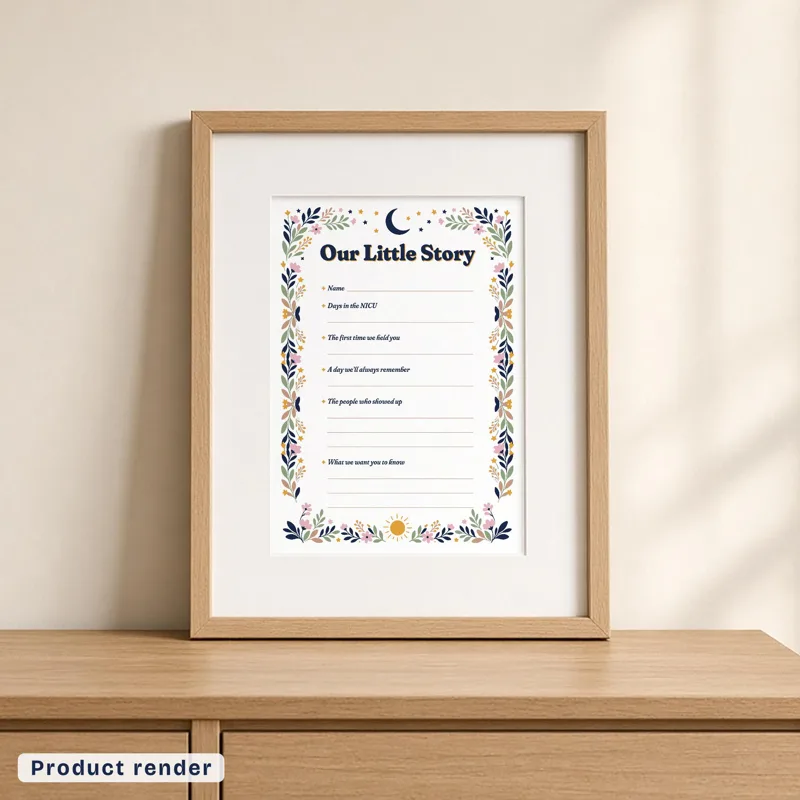
If your family is keeping a NICU keepsake, a big brother or sister can help with it. The Our Little Story printable is a page you fill in by hand, with spaces like "The people who showed up" and "What we want you to know," and a toddler can add a scribble or a drawing beside your words. A plain notebook works just as well.
If your toddler can visit
Every unit has its own rules about sibling visits, such as ages, health checks, hours, and how many people can be at the bedside. Rules can change during cold and flu season. Start by asking your nurse; our questions to ask NICU nurses and doctors include visiting rules for family and siblings.
If it's a yes, a little preparation helps:
- Show them first. Look at photos of the baby and the room together before the visit.
- Tell them what they'll see and hear: lots of beeping, nurses walking around, and other babies' beds.
- Practice the rules at home: washing hands, quiet voices, and asking before touching.
- Keep it short. A few minutes can be enough for a toddler.
- Bring a second grown-up who can step out with your toddler if they need a break.
- Talk after. Ask what they noticed and what they wondered about, and answer simply.
Some toddlers love it and some find it too much. Both are okay. A wave through a window or a video call can be a good first step.
Keeping home feeling like home
When so much is changing, the ordinary things matter most to a little one.
- Keep routines for meals, naps, and bedtime as steady as you can, even when different people are doing them.
- Keep the same few caregivers where possible, and write down your toddler's routine for them.
- Tell the daycare or preschool teacher what's going on, so they can help and let you know how your child is doing.
- Make a simple picture calendar that shows who is picking them up and when they'll see you.
- Protect a little one-on-one time. A short story or a snuggle before you leave counts.
- Say yes to help with school runs and outings. If friends ask what they can do, our guide to thoughtful gifts for NICU parents has ideas, including time with older siblings.
Packing for the hospital while juggling home? Our NICU hospital bag checklist keeps the back-and-forth simpler.
Big feelings, theirs and yours
Toddlers often show feelings with behavior instead of words. Many families notice things like clinginess, more tantrums, changes in sleep, or a child acting younger for a while. It doesn't mean you're doing anything wrong.
- Name the feeling: "You miss me. I miss you too."
- Let them play it out with a toy doctor kit, a doll, or drawing.
- Keep limits kind and steady. Familiar rules help children feel safe.
- It's okay if they see you sad sometimes. "I'm sad because the baby is in the hospital. It's not because of you."
If you're worried about your child, their pediatrician is a good person to ask. You can also ask whether your NICU has a social worker or child life specialist who helps brothers and sisters. And you need care too: our questions about support for parents are a place to start.
If the news is hard
Some families face the hardest news a parent can hear. If your baby is very sick, or has passed away, young children still need short, true words and the people they trust close by. You don't have to find those words alone. Your NICU's social worker, chaplain, or child life team can help you talk with your child, and it's okay to ask them more than once.
Questions parents ask
- What should I tell my toddler about the NICU?
- Keep it short and true: the baby is staying at the hospital in a special room called the NICU, where nurses and doctors take care of babies all day and all night. Tell them who is taking care of them, and when they will see you next. Expect to say it many times.
- Can my toddler visit the baby in the NICU?
- It depends on your unit. Many NICUs have rules about sibling visits, such as ages, health checks, and hours, and rules can change during cold and flu season. Ask your baby's nurse what your unit allows, and plan a short visit if it's a yes.
- What do I say when my toddler asks when the baby is coming home?
- It's okay to say "We don't know yet. The nurses and doctors are helping the baby, and I'll tell you when I know more." Try not to promise a day or say "soon" unless your baby's team has told you.
- My toddler is clingy and having more tantrums. Did I do something wrong?
- No. Many families notice changes like this when a parent is away more and home feels different. Keep routines steady, name the feeling out loud, and find a few minutes of one-on-one time. If you're worried about your child, their pediatrician is a good person to ask.
From our family to yours: you don't have to explain it perfectly. Short, true, and loving is enough, and you can say it again tomorrow.